
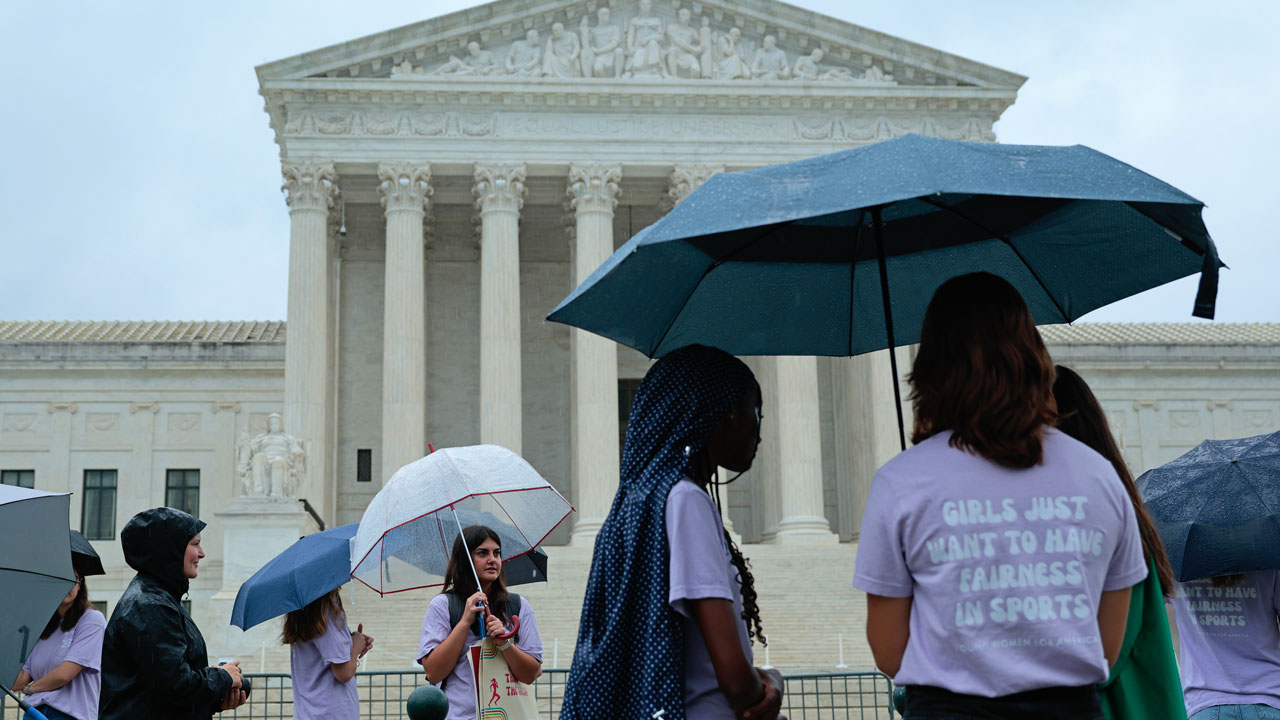
Not Just West Virginia or Idaho: Supreme Court Protects Women’s Sports in Several States
As part of the cases handed down by the U.S. Supreme Court this term, the six conservative justices delivered a win for women’s sports last week. While the cases came out of West Virginia and Idaho, the high court’s majority sent a message that reverberated in 25 states, including Ohio.
In the combined cases of Little v. Hecox and West Virginia v. B.P.J., Justice Brett Kavanaugh, writing for the majority opinion, answered “yes” when it comes to the question of whether schools may determine eligibility for women’s and girls sports “based on biological sex.”
Justice Clarence Thomas, in his concurrence, wrote that a “man does not have a legal right to compete against women just because he believes he is a woman,” noting that “men and boys with gender dysphoria are not women and girls, even if they believe that they are.”
Ohio is among the states that passed legislation recently to protect women and girls from having to compete against boys and men on their sports teams. In 2024, HB 68 went into effect after the state Legislature overrode a veto from Republican Gov. Mike DeWine in December 2023 that protected minors from transgender procedures. The Save Women’s Sports Act was included in HB 68.
Dave Yost, Ohio’s former attorney general and current vice president of strategic research and innovation for Alliance Defending Freedom, told the Daily Signal that “this is great news for all of the states that have moved to protect women’s sports.”
Delving deeper into the court’s decision, Yost spoke of “a straight line for legal commonsense reasoning,” adding, “there’s no other way to read sex in the law other than to mean boy or girl, male or female, and anything else is just not reasonable, as the court said.”
The high court has handed down other wins related to young people experiencing gender dysphoria. Last June, it handed down its decision in United States v. Skrmetti, which upheld state laws protecting minors from transgender procedures.
Yost referenced the Skrmetti case when speaking with the Daily Signal and agreed that “they’re definitely related.” With the two cases handed down last week, combined with last year’s Skrmetti case, Yost proclaimed that “the Supreme Court legalized biology.”
Yost expects to see more cases at the state and federal levels dealing with transgender questions. In Ohio, liberal groups, such as the American Civil Liberties Union, are trying to argue the issue based on a state constitutional provision passed in 2011, the Health Care Freedom amendment.
“There’s no equal protection problem there,” Yost offered, noting that the amendment passed in opposition to Obamacare. “They’re just arguing this novel thing.”
A footnote in last week’s court decisions pointed to how states are allowed to segregate between boys and girls. However, the court did not decide whether they must do so.
In some states, females are not yet protected from competing against males.
“Girls are entitled to protections whether they’re in red states or blue states,” Yost said, adding that states that dismiss the concerns of female athletes are committing an “injustice that needs to be remedied.”